Berkshire Ruminations

Tuesday, November 03, 2009

Berkshire History in the Making!

I don’t maintain this blog much anymore, but that doesn’t mean I don’t follow Berkshire Hathaway. And I would be remiss not to comment on the news I awoke to this morning.

Today is likely the most historic day in the history of Berkshire. The company is making the largest single acquisition – by a huge margin – that it ever has by acquiring the 75% of Burlington Northern Santa Fe it doesn't already own. Additionally, BRK.B is getting split 50-for-1. No more $3000 shares. Is this the end of the BRK mystique?

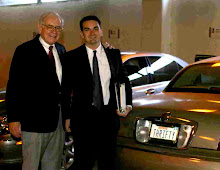
Two years ago, while teaching the Warren Buffett class, Burlington Northern CEO Matt Rose visited our MBA program. It proved to be a perfect opportunity for the students to see the tires meeting the track. Berkshire had just made its first major investment in Burlington Northern, and Mr. Rose couldn’t have been happier about it. We were able to quiz him about Buffett’s interest in the company, the company’s growing returns on capital and its position in a changing U.S. economy. We found him to be very personable, optimistic and, at least ostensibly, very honest. I am not surprised whatsoever that Buffett befriended Mr. Rose.

But the most important lesson was a crucial one to the study of Buffett and Berkshire Hathaway. While BNSF was far from a typical Berkshire investment, it had enough of the characteristics Buffett looks for to make it appropriate for Berkshire’s portfolio. Railroads are interesting investments because, on the one hand, they are very capital-intensive and lack what Buffett calls “franchise value.” However, more than compensating for these shortcomings is the economic position of the company.

All railroads – and BNSF in particular given its reach – basically own the transportation rights of anyone wishing to ship goods, much like a toll bridge. Of course, Mr. Buffett famously identified “toll bridge” type businesses as desirable investments early in his career. After his investment in the Buffalo Evening News in 1977, Berkshire was sued by the News’ only competitor. The plaintiff claimed Buffett was trying to drive it out of business to give the News a monopoly in the market. This was probably true. During cross-examination, Buffett explained that newspapers are like “toll bridges” in that they are relatively free to raise advertising rates as much as possible because anyone wishing to advertise in town had nowhere else to turn. I can just imagine his legal counsel cringing as he explained this concept in what was undoubtedly his characteristic simple, matter-of-fact style.

Railroads are very similar. The tracks have been laid, and for the most part will not be expanded. BNSF owns the largest portion of these tracks. With oil and gas prices set to rise (I’m talking long-run here) the greater fuel efficiency of shipping via rail versus truck will become increasingly appealing. And when this shipping occurs via rail, shippers will have little choice over with whom to do business.

Moreover, for a hundred years railroads have been consolidating. Now there are only a few very large railroads left. This seems to have resulted in significant scale economies, because returns on capital are for the first time in many years convincingly and consistently in excess of the cost of capital. These companies are creating value.

A difficulty I have had in teaching the Warren Buffett philosophy over the years is that there are many different attributes that may make for a good stock investment. We can try to construct a checklist of things Mr. Buffett looks for – many people have tried over the years. But the reality is that each potential investment must be evaluated on its own merit, not necessarily its merit relative to some predetermined definition of quality.

Tuesday, September 15, 2009

Big Government, Small Growth

I am an empiricist and leery of any economic assertion that isn't backed by sound data. And so I was pleased to see Dan Mitchell's latest video because towards the ends it gives a brief bibliography of work published in top-tier economics journals that provide empirical results pertaining to the size of government. I think now, with the government spending $2 trillion a year more than it brings in through taxes, it is important to give such evidence serious consideration because at the very least the benefit of this government spending must offset the cost of inflationary pressure caused by an ever-increasing money supply.


Wednesday, August 12, 2009

Apparently a no-brainer. Who knew?

I thought it was interesting that yesterday the Wall Street Journal reported that "economists are nearly unanimous that Ben Bernanke should be reappointed to another term" and that the majority also "say the recession is over." Who exactly are these economists, I wonder. Let's just hope they are better at predicting the economy than Bernanke himself!

Thursday, August 06, 2009

100% Insanity

To me, this is proof the mainstream media has absolutely no clue about economic reality.

CNN proudly boasts today that Cash For Clunkers program is “Real Stimulus,” claiming that “The boost to auto sales caused by the government trade-in program should lead to increased production from Detroit. That could have a big ripple effect.”

This whole Clunkers idea is rooted in the Keynesian logic that spending in and of itself stimulates economic growth. The logic goes that, because we built up our economy during good times and when times get rough various elements of the economy are suddenly underutilized, someone needs to fill the gap. Keynesians believe this gap should be filled by the government. What is ridiculous about this idea is that the government cannot produce any wealth, it can merely reallocate it. In order to fill this gap it must either tax its citizens or borrow. No new wealth is created through either process.

While Keynesian stimulus is clearly ridiculous, a lot of people believe it. So let’s say, just for the moment, that government spending is economically stimulative. All Cash For Clunkers will do is to pull demand forward a period or so. All those people who were driving vehicles that would need to be replaced in one or two years will replace them now. What happens in one or two years? Lower auto sales because fewer people are replacing their clunkers! This results in the same overcapacity a few years down the road that the stimulus was designed to fill today. The moral of this story is simple: the government can treat the symptoms, but it cannot cure the disease.

People can easily define their wealth on an individual level. I own a house, a car, furniture etc and all these things have value because they are useful. Therefore my wealth is defined as the cumulative value of all these useful things I own less the claims others have on them (read: debt). But when we expand this to the national level people seem to have trouble understanding.

American wealth is all the stuff we own, collectively, that has value. So when the government destroys things that have value, like cars worth less than $4500, this destroys wealth. The guy who sold his $2000 car to the government for $4500 may indeed by $2500 wealthier, but this wealth had to come from somewhere. (While the government can create money out of thin air, it cannot create wealth out of thin air.) In this case, because $2000 in wealth was actually destroyed, the full $4500 will come from everybody that doesn't sell their car to the government. The rest of the population doesn’t notice this personal wealth loss because it is either too small when spread throughout the economy or it hasn’t even happened yet and will eventually be borne by future generations.

This wealth destruction is particularly pronounced when the government doesn’t have the $4500 in its pocket that it needs to purchase the vehicle that it plans to destroy, because this means the purchase will have to be financed with borrowing. Because the national debt is already unmanageable, eventually this $4500 debt will be monetized by printing new money to repay it (a process that, incidentally, has already begun). This causes inflation, which lowers the wealth of everyone that owns dollars.

So I guess the only conclusion I can draw from this nonsense is that our elected leaders and the majority of our population continue to behave like children. Listen carefully: Americans already have too much debt. The last thing the government should be doing is encouraging them to take on even more, while simultaneously taking on more itself!

But alas, humans aren’t long-run thinking for the most part, so it shouldn’t be a surprise that the reaction to economic crisis is to lessen the pain in the short term at the expense of long term prosperity. And that, clearly, is why the Clunkers program has been praised by just about everyone that hasn’t really thought it through. Just as someone apparently has defined “stimulus” as government spending concentrated over a short period of time, they have defined “success” of the Clunkers program by the program’s ability to concentrate car sales in a short period of time. Congrats guys. You did it. I hope your grandchildren can forgive you.

Saturday, August 01, 2009

Cash For Clunkers

Here’s an idea for wealth creation that can’t fail:

Let’s encourage everybody with a particular asset that has value - namely a car worth less than $4500 - to sell it to the government so the government can then destroy it. The government will finance the purchase of this soon-to-be destroyed asset with money borrowed from foreign investors (since it doesn’t have any money of its own and seems unconcerned with the prospect of exponentially rising levels of debt). Then, after the asset is destroyed, the remnants of it will be shipped abroad in the form of scrap metal, so that foreign manufacturers can re-form this metal in to a new valuable asset that Americans will be more than eager to purchase with money they still don’t have.

Yeah, that should work.

Saturday, April 25, 2009

Buffett was wrong about this one. (Unfortunately it is the most important one of all.)

This is an issue that has become very important to me lately, and I hope readers will be patient and read through my thoughts. It is not a pleasant topic and most people would prefer to pretend the problem doesn’t exist. But it needs attention soon.

One evening last spring I took my wife to a local movie theater to see the premiere of the documentary I.O.U.S.A., the movie designed to increase awareness of the “inconvenient fiscal truth” that our nation faces. It was a great event, and was followed by a live Q&A with some of the stars, including Dave Walker and Warren Buffett.

Walker was the doomsayer, and expanded on the already strong case made by the movie that due to the national debt and other liabilities of the federal government, our children are destined to end up worse off than we are today. Buffett was the counterpoint, arguing that although it is a serious problem, America will be fine in the long run.

Buffett was wrong.

I wanted to believe the guy, my hero, the Oracle of Omaha. But the facts just didn’t support his Alfred E. Newman-esque stance. Here we are a year later, and things not only look bleaker than ever, it almost seems as if the sky has started its fall.

When Bush 43 took office in 2001, our nation had $5.6 trillion in outstanding debt. In the eight years since then, through a combination of tax cuts, wars and expensive Medicare supplements, the amount has mushroomed to nearly $11 trillion. Think about that: the balance of our national debt is climbing at an annual compound rate of 9%. And this doesn’t even include the unfunded liabilities of Medicare and Social Security, which will come due at ever increasing rates in the coming years and by most accounts dwarf our current $11 trillion in debt.

The Peter G. Peterson Foundation estimates that our “real” national debt, after accounting for all these unfunded liabilities that will presumably have to be financed by taking on additional debt, is now $56.4 trillion – four times our current GDP. Comfortably paying this off is simply an impossibility.

Now, in a misguided Keynesian approach to solving the financial crisis(which is not unrelated to the problem of government overspending in the first place), Obama and the others are spending a trillion dollars MORE of money WE DON’T HAVE. Of course, this is not a Democrat or a Republican issue. Democrats like to spend money, Republicans like to cut taxes. BOTH are equally dangerous. No one will want to do it, but what this country needs is higher taxes, lower spending and a higher personal savings rate. How the hell are we gonna pull that one off??

I don’t think we will. And that is why I think Buffett was wrong. Washington, now more than ever, lacks the political will to correct this problem. And that is why we are doomed. Sadly, what will eventually happen is the government will have to print enormous sums of new money, causing hyperinflation and prohibitively high interest rates. What it cannot do, ironically, is choose to simply default on its mountain of debt as the Russians did in the 90s. This is because the vast majority of our debt is actually owed to ourselves, via Social Security and Medicare entitlements. What a fricking trainwreck.

What I am saying is nothing new. People throw these kinds of numbers around all the time. At some level, this may even be counterproductive – people get desensitized to the enormity of problem. What we don’t hear enough about is what life will actually be like when this hits the fan some twenty years down the road. How will we be living when 75% of our GDP is committed to simply servicing our national debt? Where will jobs come from when reinvestment ceases because corporations are forced to forfeit their earnings to the government? How will the citizenship react the government is forced to confiscate nearly all the earnings of the public while simultaneously eliminating the programs upon which everyone has become so accustomed to relying? From a sociological perspective, this is terrifying. Chaos could ensue. Good thing the second amendment hasn’t been completely repealed.

Perhaps most frustrating to me is that the root of the problem seems to be something that is all but impossible to change. It is a societal attitude towards debt – the entitlement philosophy that WAY to many (though not all) Americans adhere to. I DESERVE that 52” plasma tv, because I work ten hours a day flipping burgers, and burger flipping is hard work. That kind of attitude will kill a society fiscally, because the truth is that simple hard work does not entitle you to anything more than someone else is willing to pay you for that work. If they don’t pay you enough, you need to find a way to become more economically productive so as to boost your wages so that you can afford that Cadillac Escalade only AFTER having saved for it.

It’s a chicken-or-egg situation to determine whether it is the government setting a bad example for individuals or if it’s an infiltration of the government by entitlement-minded individuals, but clearly both segments of our society have the same attitude towards debt. This MUST change.

I worry about my one-year old son, David, and what type of world he will face as an adult. For his birthday earlier this month, a good friend of mine gave him a $50 Series EE “Patriot” savings bond. I loved the message of savings and responsibility in such a gift, I only wondered if it would be in default when David goes to cash it in 2039. I tell you, I would do anything possible for my son but ensuring he lives in a prosperous economy seems beyond my control. That worries the hell out of me.

I am sure many folks will think I am wacko for this outlook, but I hope those that do take an honest look at the situation before concluding I am wrong. At a minimum we need to put ourselves on track to reverse the current trend.

*** Clarification, 28 Apr 2009***
In this post, I did not mean to imply that I think Buffett was wrong just because of what has happened over the past year. Buffett said last spring that "America will be fine in the long run" and by long-run I assume he means 30, 50 years. I just happen to disagree becuase as long as we continue this trend of enormous deficit spending ($1.7 trillion this year alone) we will not be fine in the long run.

Thursday, April 23, 2009

GM - What a joke

Let’s face it. General Motors is in terrible shape. It sells an unpopular line of vehicles and is completely captive to its inflexible cost structure. Despite what political pundits would like to suggest, the company’s troubles are not the result of a lack of environmentally friendly products – they are due to the fact that consumers just don’t want to buy their cars. It’s really pretty simple.

Now, having said this, the stock of the company is not inherently a bad investment. For one thing, the company seems to (for elusive reasons) be wholeheartedly supported by US government. This is almost certainly the only reason why the company has not already filed bankruptcy, after all in the past three years GM has posted cumulative losses equal to twice market cap of the company when the stock was at its peak.

There are a lot of stakeholders in a company as large as GM, but of all of them bankruptcy would hurt the shareholders the most. So there is value to the nonzero probability that the company will somehow avoid bankruptcy and survive as a going concern. (Aside: In the case of a GM bankruptcy I would say there is an above-average chance that absolute priority would be violated and shareholders would not lose completely, in light of the “too many people have their 401(k)’s invested in GM stock” mantra.)

But GM stock is cheap. Really, really cheap. From its 2007 high, the stock has lost an astounding 96% of its value. So, for the moment, let’s assume the company does not file bankruptcy and that we must rely on the future cash flow production of the company to assign the stock a value. Believe it or not, even the current stock price of $1.69 may be too expensive because this price implies Required Business Performance that is actually greater than most people expect.

At the current price, revenue can decline by only 12% in the upcoming twelve months, and this is assuming a moderate improvement in gross margins. This does not seem likely to happen. In the absence of the unprofitable sales generated in 2007 by heaving discounting and promotion, sales of the company have been steadily declining for several years, in fact in Q4 of 2008 sales fell 35% versus the same quarter a year earlier. And now the company faces not only its internally generated hardships but also an unforgiving macroeconomy.

For these reasons, even though the stock is basically as cheap as it has ever been, the company still has only a 50% RBP Probability, indicating that it’s pretty much a flip of the coin as to whether it will produce the results need to support an already miserable stock price. There are a lot of cheap stocks in this market. GM is one that is cheap for a reason.

Friday, February 27, 2009

A dual-class arbitrage in Berkshire stock?

Hat tip to Ray for pointing this out to me. A few days ago BRK.B was trading at a level significantly lower than 1/30 of BRK.A. In fact the spread represented 7% of the value of BRK.B.

This was a decent arbitrage opportunity, as the two BRK classes have historically been pretty good about reverting to parity fairly quickly. Indeed, within two days the spread has already narrowed to less than 2% (as a % of BRK.B). Below is a chart of the difference over the last year.


It is interesting to see how the spread became more erratic as market volatility increased in the fall. Note that the spread rarely dips into the negative. This is by construction, since BRK.A is convertible in to BRK.B but not vice versa. This means that a mispricing favoring the B shares could immediately be corrected by arbitrageurs converting their A shares to B. But the opposite cannot be done, leaving the arbitrageur at the mercy of the market to correct the mispricing.

In the rare cases when the spread does bounce up to the 7% range, this makes for an opportunity for a quick profit for those vigilant enough and quick-fingered enough. The recent bounce lasted at least 24 hours from what I could tell, which is plenty of time to implement the trade.

A few other notes: BRK is a great stock to play the dual-class arbitrage with because it is so liquid and small investors should have no trouble finding A shares available for short. Of course, you need at least $78,000 in capital so I guess the really small investor is out of luck.

Moreover, the differential in voting rights between the A shares and B shares is inconsequential in the case of Berkshire since Buffett et al. control the voting power of the company anyhow. Thus we can expect the 1:30 ratio to hold irrespective of the differential voting rights of the two shares.

I suppose measuring the spread as a % of BRK.A would be more appropriate, because a true arbitrage strategy would short BRK.A and long BRK.B, holding until the difference was zero.

Friday, February 20, 2009

At what point does Berkshire get "stupid cheap"?

I own a lot of Berkshire stock. I don’t like seeing it go down because I don’t have a lot of liquidity at the moment, otherwise I would welcome the buying opportunity. But this begs the question, is this indeed a buying opportunity ? Or is it the beginning of the demise of the greatest investment of all time?

With is decline today, Berkshire stock has just experienced its largest drawdown ever. From Jun 19, 1998 to Mar 10, 2000 (the same day the NASDAQ hit its high, by the way), BRK lost 48.9%. From December 7, 2007 to today, BRK has lost 49.33%. It is worth noting that its current low is 81% higher than its 2000 low, which equates to a 5.6% annual compounded rate of return (trough-to-trough). Not exactly Berkshire’s historical annual average.

In my opinion, Berkshire currently suffers from a tremendous lack of transparency. This may sound blasphemous, but it is not. Although Warren Buffett prides himself in holding simple, understandable businesses, Berkshire’s portfolio is anything but. The company has an insurance business that only Buffett fully understands, with mysterious macro bets that seem entirely inconsistent with the style of investing that got the company to where it is today.

Investors are rightfully very suspicious of all these derivatives, particularly since Buffett refuses to talk about them except in broad, vague terms. I’m not faulting him for this necessarily, since for many companies such refusal would be expected. But we expect Buffett to explain everything to his investors much more thoroughly than a typical CEO would. If he believes the annual report should provide investors with enough information to allow them to accurately value the company, as he has said in the past, then it might seem he is now failing in this regard.

In last year’ letter to shareholders he goes in to quite a bit of detail about what derivatives the company owns, but in the current market environment this information is stale and insufficient. For instance, he says,

We have written 54 contracts that require us to make payments if certain bonds that are included in various high-yield indices default. These contracts expire at various times from 2009 to 2013. At yearend we had received $3.2 billion in premiums on these contracts; had paid $472 million in losses; and in the worst case (though it is extremely unlikely to occur) could be required to pay an additional $4.7 billion.

This is clearly a much higher level of disclosure than many companies would provide. But it almost raises more questions than it answers. $4.7 billion? Has this happened? The third quarter 10Q provides no more detail, but does indicate that a) the company wasn’t substantially hurt by the derivatives up to that point and b) that it increased the size of its derivative portfolio. (I lump both the options and credit default swaps in to this category.) The real problem is that there is no telling what has happened since September 30.

Of course there are more obvious reasons for the Berkshire’s stock’s slide. Two of Berkshires three largest common stock holdings, Wells Fargo and American Express (Coca-Cola is the third) have each been clobbered by more than 70%, costing the company at least $11billion were we to mark them to market. Ouch. Kinda makes you wonder if he (along with just about everybody else) misjudged the threat of financial contagion on Berkshire’s investments in financials, or for that matter the ability of management at these (supposedly very strong companies) to resist it.

The annual report that is due out in the next few weeks will be very interesting. We have heard the “end of Berkshire” refrain before, not coincidentally at the same time as its last trough that I mention above. So on a superficial level one might be inclined to assume it’s another chicken-little situation. But this recession is different from the tech bubble burst and I’m not counting any chickens just yet anyway. There is just too much uncertainty this time around.

Thursday, January 22, 2009

RBP Investing Update

Back in June I mentioned on this blog that I had started working for a company called Transparent Value, which developed the Dow Jones RBP Indexes based on their proprietary methodology called "Required Business Performance," and that I had been writing a blog for them.

While I realize it may sound like I am just trying to sell the company, I seriously think anyone with an appreciation for value ought to give this methodology a look because it looks like the guys at Transparent Value really are on to something. This is evidenced by the performance of the indexes in 2008. If you had used their methodology to construct a long/short market neutral portfolio you would have beaten the market handily (and actually earned a positive return in 2008!). Granted we only have one year of performance history, but what a year it was to test an idea like this!

For an academic and value investor like me, their methodology is the perfect blend of empirics and fundamental value. Basically they take each company determine what assumptions one would have to make about it in order to make a DCF valuation yield whatever the current stock price is. Then based on historical performance the assign each company a probability that they will be able to deliver up to those assumptions. The indexes simply select stocks based on this probability.

I am always looking for empirically solid but economically logical investing strategies (in fact my other blog, Empirical Finance Research, is devoted to this idea alone) and RBP fits in perfectly. If any readers of this blog have questions about it, let me know because its sometimes hard to understand at first. But once you get the gist of it it's pretty rockin.

Friday, January 09, 2009

Fundamental Value Investors: Characteristics and Performance

My good friend Wes Gray and I recently wrote an academic paper about value investors. Wes is a fellow coauthor mine over at the Empirical Finance Research blog. In our paper we analyze the investment recommendations on the website Value Investors Club, which in my opinion has some of the highest quality research accessible by the general public.

VIC started about nine years ago and today has more than 3000 very high quality research reports written and published by its members. Most, though not all, VIC members are professional money managers and membership in the club is limited and coveted. Wes and I wondered (from an academic point of view) if these people were actually able to beat the market given that, in an efficient market, we would expect them to not.

Our results indicate they do beat the market and can produce substantial alpha over one-year holding periods. They do best picking small cap stocks, but for horizons longer than one year they fail to beat the market. From this we conclude that there is more inefficiency in small caps and that the broader market recognizes these inefficiencies if you give it a year. This was an exciting finding for us since it logical and makes economic sense and also means we aren’t wasting our time reading VIC write-ups!

Anyway we posted the paper at SSRN yesterday and Guru Focus has already republished it themselves, although I am keeping an updated version on my personal webspace. We would love getting feedback on it as we are looking to improve it and prepare it for academic publication.

Thursday, December 18, 2008

Doing the math on CEG (back of the envelope)

I post this not as any type of authority, but just to figure it out for myself. Can anyone explain better than I have here why CEG stock fell yesterday?

This past summer MidAmerican Energy agreed to acquire all outstanding shares of Constellation Energy Group (CEG) at a price of $26.50 per share in cash, or $4.7 billion.

EDF came along a few weeks ago and offered to pay $4.5 billion to acquire half of CEG’s nuclear division.

In 2007, the nuclear division generated about 60% of CEG’s revenue. So, effectively, EDF was offering to pay approximately as much for 30% of CEG as MidAmerican was offering to pay for the entire company. EDF emphasized that this offer priced CEG stock at a minimum 100% premium to its market price.

Before the EDF offer, CEG stock languished at around $23.50, about a $3 discount to the MidAmerican’s cash offer price of $26.50. Upon the offer, CEG stock shot up to around $28, clearly because EDF’s offer was so superior.

Yesterday, both companies confirmed that MidAmerican was terminating its agreement to acquire CEG. As part of this termination, CEG was to pay MidAmerican a breakup fee of (approximately) $500 million plus shares equaling 10% of CEG’s equity. Upon the announcement of the termination and subsequent details of the breakup, CEG fell 12%, to less than $24/share.

If EDF is offering to pay $4.5 billion for 30% of the company, then the company as a whole should be worth $15 billion minus the breakup costs, assuming of course EDF is not overpaying. With 178 million shares outstanding, this would be about $84/share minus breakup costs.

At its current price, CEG has a market cap of $4.3 billion. In other words, it is about to sell part of one of its units for more than you could buy the entire company for today. Were you to buy CEG today you would (theoretically speaking) get all your money back upon the consummation of the EDF deal, leaving you with half of the nuclear unit and all the rest of CEG as gravy, but also with the obligation to pay MidAmerican $500 million in cash (about $3/share) as well as shares equal to 10% dilution of the stock (if we assume intrinsic value before dilution is 84 – $3 = $81 then this would be $8.10/share).

So what do we have? CEG should be worth $84 – $11.10 = $72.90? Is this right?

I think it may be, but that doesn’t make it a buy. Not in this market anyway. I mean, the stock soars when the EDF deal was proposed, then tanks when the deal was confirmed. This is just nutty.

The logical explanation for CEG’s fall yesterday is that investors simply will not buy anything in this environment that does not have an identifiable and imminent catalyst. There is value all over the place right now, so CEG is not alone with its unfairly low valuation. Because of this, and because the market is so nutty anyway, investors just don’t want to put up with owning the stock now that they know they won’t be getting their $26.50 cash payout.

These are amazing times. Ben Graham is smiling from the heavens I am sure.

Monday, December 15, 2008

Thoughts on a Big 3 "Bailout"

With so much talk, debate and controversy over the idea of “bailing out” the Big 3 automakers, I find it amazing that so little of this discussion has been on the topic of bankruptcy. The media, congress and the Big 3 CEOs seem to accept as a foregone conclusion that a bankruptcy filing would be a bad thing. This is completely absurd and I would like to discuss why.

Businesses fail in this country (and across the globe in fact) all the time. Because of this, and because chaos might ensue among creditors otherwise, we have this nifty section of the U.S. Code called Title 11 entirely devoted to the idea of the federal court system dealing with failing businesses (or individuals) and aiding in equitable distribution. This is not new – the power to codify such a thing was written in our constitution. What is new is the idea that in some instances we ought to abandon this time-tested framework and instead let Congress directly and deliberately affect the outcome of financial distress for a limited and specific group of companies. Reminder: Congress is not in the business of running businesses. (We need to remind ourselves of this these days.)

I will, for the purposes of this essay, assume that it is in the best interest of the nation to see the Big 3 survive. However, I do think very strong arguments can be made that they ought to be competed out of existence. Nonetheless, let’s assume that the job losses that would result from an outright liquidation of the automakers would be permanently catastrophic to our economy.

Under this scenario the solution is simple: File Chapter 11 like every other company that runs in to difficulty. Many pundits seem to be equating bankruptcy with corporate death, which is just not the case. Chapter 11 primarily allows a firm to restructure its capital. In the end the company comes out of bankruptcy with less financial burden. Operational changes usually occur, but that is not the point. It is a financial maneuvering first and foremost. Filing Chapter 11 does not necessarily mean any factory-line autoworker need lose his job. However, one caveat: If your job is not needed, it may (and should) be put on the chopping block as part of the plan of reorganization. Perhaps this is reason for the UAW’s opposition to bankruptcy?

What Chapter 11 does usually mean is that the CEO will get fired. With very rare exception, the existing CEO gets canned between the time the bankruptcy petition is filed and the plan is confirmed (for empirical support of this contention see Hotchkiss (1995)). This, I think, is why we saw the three CEOs fly their corporate jets to Washington to beg for help. All of them are probably not long for their posts, save perhaps for Mr. Nardelli, who could probably make the strongest argument he is not to blame for his firm’s woes. Thus, the CEOs clearly would rather not go the Chapter 11 route. And so they go before Congress to testify in front of a group of politicians that desire to be seen as the saviors of the auto industry, and who know that the majority of the American public doesn’t really understand what bankruptcy is. It’s a win-win for the powers that be. Not so much for the millions of other stakeholders.

There are two reasonable arguments against a Chapter 11 filing for the Big 3. The first is the weakest, but also the one that has been cited the most by the ignorant media. People won’t buy cars from a bankrupt automaker. Sounds bogus to me, I mean people fly on bankrupt airlines every day. But maybe it is true if potential customers are legitimately worried about the soundness of their warranty. Perhaps. But there is a logical solution that does not include writing a $14 billion check: Have the government guarantee all Big 3 car warranties for a period of time sufficient to restore confidence in the companies. Maybe until confirmation of a Chapter 11 plan of reorganization when the company will have more firm footing?

The other argument against Chapter 11 is more legitimate. This is that, once in bankruptcy, the automakers won’t be able to find the necessary debtor-in-possession financing to keep them afloat through plan confirmation. One reason bankruptcy works as well as it does is that, once the petition is filed, all subsequent debts are given priority over pre-petition debts. This is called debtor-in-possession (DIP) financing. With the credit markets tightening, it is not unlikely that the Big 3 would find DIP financing scarce. No problem! The government can't wait to lend these companies money. Problem solved.

If the government is going to provide lending to the Big 3, it ought to be under the oversight of the bankruptcy court. Congress could tell them to go ahead and file, while assuring them that DIP financing will be available from the government if needed. It seems unnecessarily arbitrary to extend a loan to a troubled company outside of bankruptcy for no other reason than that they employ many people. By structuring government involvement within the framework of bankruptcy (through a government-backed DIP loan and/or guarantee of manufacturer warranties), at least the many other existing creditors will have a voice in the direction of the companies by allowing them to vote on the plan of reorganization.

I don’t like the term “bailout” because it implies that whatever problem exists will be fixed. Congress' proposed bailout promises a great deal of bailing, but not much hope for a bail-out. I mean seriously, blindly throwing money at businesses that are losing billions of dollars every year with no real guarantee that anything will change is an awfully foolish idea for anyone, but especially the government.

Thursday, November 06, 2008

Merger Arbitrage Mania!

I haven’t heard a lot of discussion about this, so I thought I would put my thoughts down on this blog, because to me the phenomenon is pretty obvious. There is some serious value out there right now, and for the last two months the market has been more inefficient than I have ever witnessed in my lifetime. Many stocks, especially small caps, are selling at valuations FAR below their intrinsic value, even after accounting for the possibility of severe and prolonged recession. I am convinced the reason for this is not fundamental, it is institutional.

Hedge funds make up a huge portion of the market and the vast majority of them are levered, many highly levered. By “hedge fund” mean simply the plain-vanilla, independent equity long/short type (not the arcane structured-product investing kind like Bear Stearns’ that got us in to this mess in the first place). By “highly levered” I mean anything from 400% gross exposure (this would be 200% long and 200% short) to infinity.

These are the types of investors that buy up small value stocks. Well, when liquidity dries up brokers have to boost margin requirements. Couple this with falling stock prices and the resulting margin calls and what you have is a situation where everyone is selling. This is basic stuff. But compounding the problem is even more selling as the result of investor redemptions. All hedge funds have different redemption periods, but my guess is that as the year closes we will see even more hedge fund selling as investors dissatisfied with this year’s performance cash out.

I still think it is this delevering phenomenon that explains much of the disparity between price and value that we are currently seeing in the market. But where it seems most obvious is in the merger arbitrage arena. This is where I am focusing currently because a) the value of the stock is much less ambiguous and b) the delevering effect is likely especially pronounced among stocks heavily invested by hedge funds who must leverage up substantially to take advantage of what are typically small discounts.

The first case-in-point is a long-time favorite company of mine, Anheuser-Busch (BUD). InBev settled with BUD back in July to purchase the company for cash of $70/share by calendar-year end. The stock hovered around $68, representing a reasonable merger arb discount, until the market blew up in September. At this point the stock, like all others in the market, fluctuated wildly and momentarily got as low as $56. This $14 discount implied a 25% raw return, or 240% annualized! Investors immediately assumed this was because the deal was in limbo because of the state of the European credit markets. But InBev soon issued a press release reiterating that the cash offer was still a go and still expected to close by the end of the year.

I was lucky enough to load up on BUD around $58. Since I don’t mind owning it as a standalone company (in fact I had for many years anyway), my rationale was simple since the expected value of the purchase was enormously positive. That is, there was a high probability of the deal going through, resulting in a large gain, and only a small probability of it not going through, which would result in only a small loss.

The second case-in-point is an even bigger no-brainer. Remember back in September when Berkshire Hathaway announced that MidAmerican Energy would acquire Constellation Energy (CEG) for $5 billion or $26.50 per share? Did you know the stock is currently trading at $23.50? This doesn’t make any sense, but yet the cigar butt is right there in front of us. With this deal, although not expected to close until sometime in Q2 of 2009, there is absolutely no danger of the acquirer failing to find financing. We are talking about Warren Buffett and his war chest!

I believe that the only reason these situations are occurring is because of the deleveraging effect. It certainly does not seem to be a function of risk so far as I can tell. Highly levered hedge funds MUST sell off their BUD or CEG stakes simply to meet higher margin requirements or investor redemptions. This leaves the individual investor with some great opportunities. But these types of opportunities are unlikely to ever be repeated, which is why I am placing large bets on them.

A couple of other merger arb plays to consider: HPC and MVCO

Ashland Inc.’s acquisition of Hercules Inc. (HPC) is a deal that has been approved by all shareholder constituencies and is expected to close next week. I don’t know much about these companies but I can find no indication anywhere that the deal is in trouble. If it is, someone please let me know. The shareholders will get $18.60 plus 0.093 shares of the acquiring company. With Ashland currently around $20, this puts the value of HPC around $20.50. HPC stock is currently at $18.

Meadow Valley Corporation (MVCO) agreed to be acquired back in July for $11.25/share and the deal is still expected to close by the end of the year. With the stock currently under $8, we are looking at a 26% return in two months.

Another intriguing thing about these merger arbitrages is that even if our return is small, the market in general does not look good in the near term anyway. We could play the safest mergers and still come out ahead, since the standard discount out there right now seems to be in excess of 10% annualized.

FD: I am long BUD, CEG, HPC and MVCO